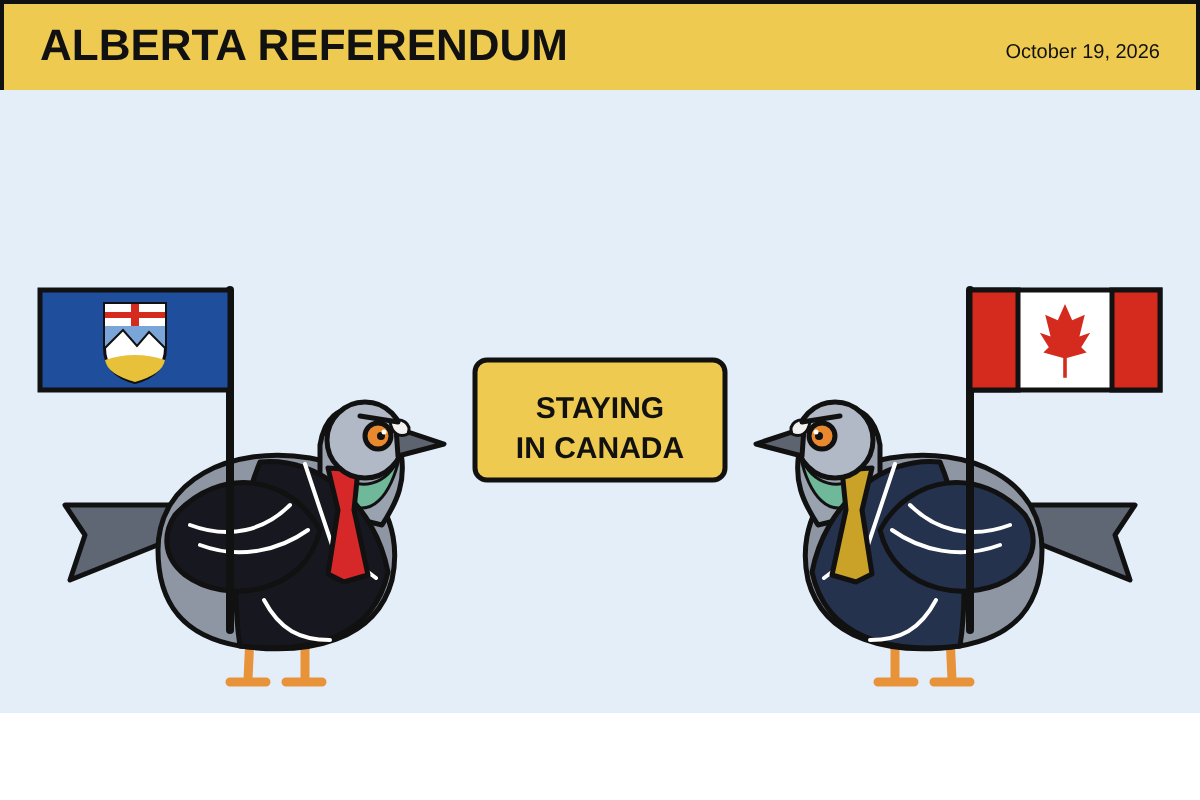
After Alberta's referendum: Canadian dollar, rates and oil
The Canadian dollar rose 0.5% on October 20, to about US$0.71, its highest in four weeks; analysts are split on the October 28 rate decision.
What happened
Canadian dollar: it rose 0.5% on October 20, to about US$0.71 (1.4045 per US dollar), its highest level in four weeks, according to Reuters. An analyst at Bannockburn Capital Markets called the result the "least disruptive" alternative, because it keeps the status quo. At that exchange rate, converting US$10,000 costs about C$244 less than the week before.
Rates and mortgages: the vote cleared a political risk, but September inflation was 3.1% (driven by gasoline 27.8% more expensive) and the Bank of Canada decides on October 28. Analysts are split: Goldman Sachs expects a hike and CIBC a hold at 2.25%.
Context
A hike would quickly make variable-rate mortgages and credit lines more expensive, because their cost closely follows the central bank rate.
Oil: Alberta contributes about 90% of Canada's crude exports; the result reduces political uncertainty for the sector, but does not change the oil price or US trade policy.
What it means for your wallet
A stronger currency makes what is paid in US dollars cheaper; a higher rate makes what is owed at a variable rate more expensive.
Track your expenses and income in any currency and see how your month moves.
Create an accountFigures and facts as of the date of the news; they may be delayed or contain errors. Informational content, not financial advice or an investment recommendation.