Australia: central bank raises its rate to 4.85%, the fifth hike this year
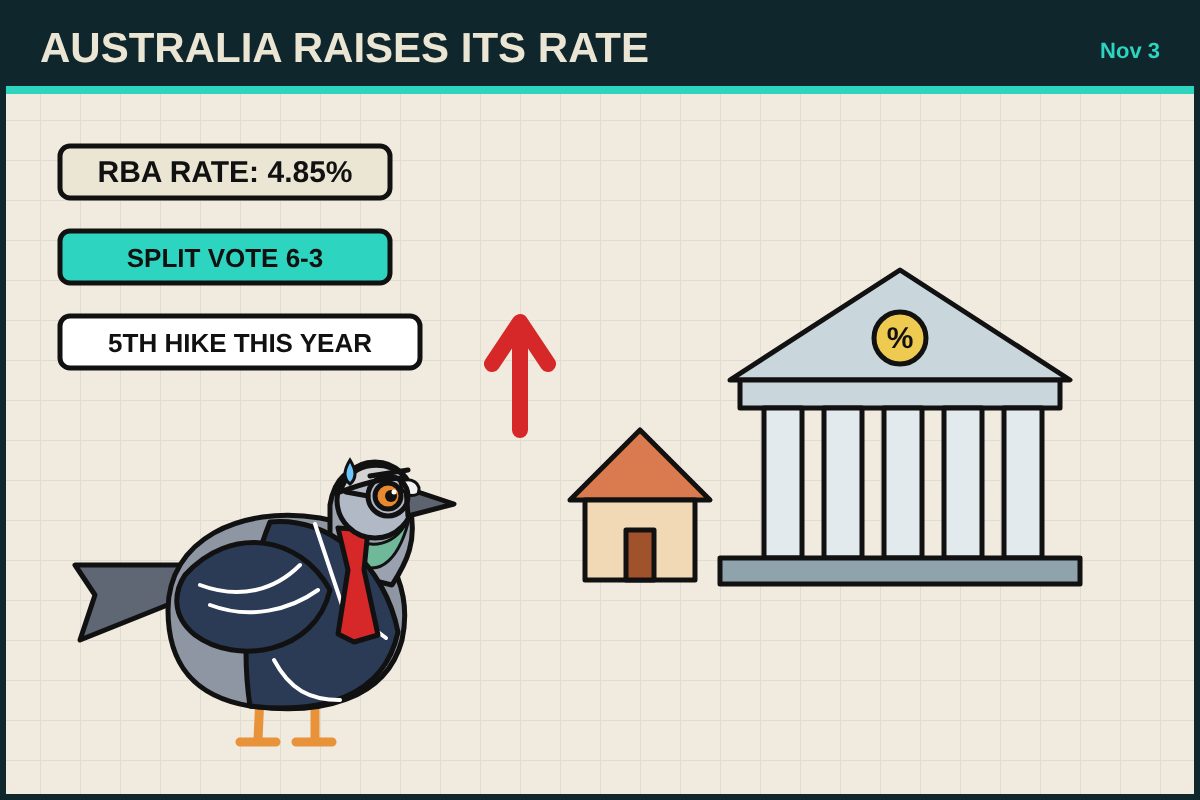
On November 3 the Reserve Bank of Australia raised its rate by 0.25 points to 4.85%, in a 6-3 split vote: the highest level since 2008.
What happened
On Tuesday, November 3, the Reserve Bank of Australia (RBA) raised its benchmark rate by 0.25 points, from 4.60% to 4.85%, the highest level since late 2008. It is the fifth hike of 2026.
The decision was split: six board members voted to raise and three to hold at 4.60%.
Context
The bank said inflation will stay high through much of 2027 and will not fall below 3% until late that year, about three quarters later than it had forecast. Deputy Governor Andrew Hauser warned that some businesses now see 3% to 3.5% as "the new normal".
Among its reasons it cited the risk of inflation expectations rising, excess demand and higher energy prices from the Middle East conflict.
At the same time the economy is cooling: house prices fell significantly this year and unemployment, now 4.7%, is projected at 5.1% in the December quarter of 2028. Governor Michele Bullock said she is "not looking to tip the economy into recession if we can avoid it". Rate changes take 12 to 18 months to flow fully through the economy.
What it means for your wallet
For anyone with a mortgage or a variable-rate loan, the payment goes up: it is the most direct hit. For savers, banks may pay more on deposits if they pass the hike on.
The economists consulted expect a pause in December and do not rule out another hike in early 2027, so it is wise not to count on relief soon.
Track your expenses and income in any currency and see how your month moves.
Create an accountFigures and facts as of the date of the news; they may be delayed or contain errors. Informational content, not financial advice or an investment recommendation.