Eurozone: inflation rises to 4.0% in October, double the ECB target
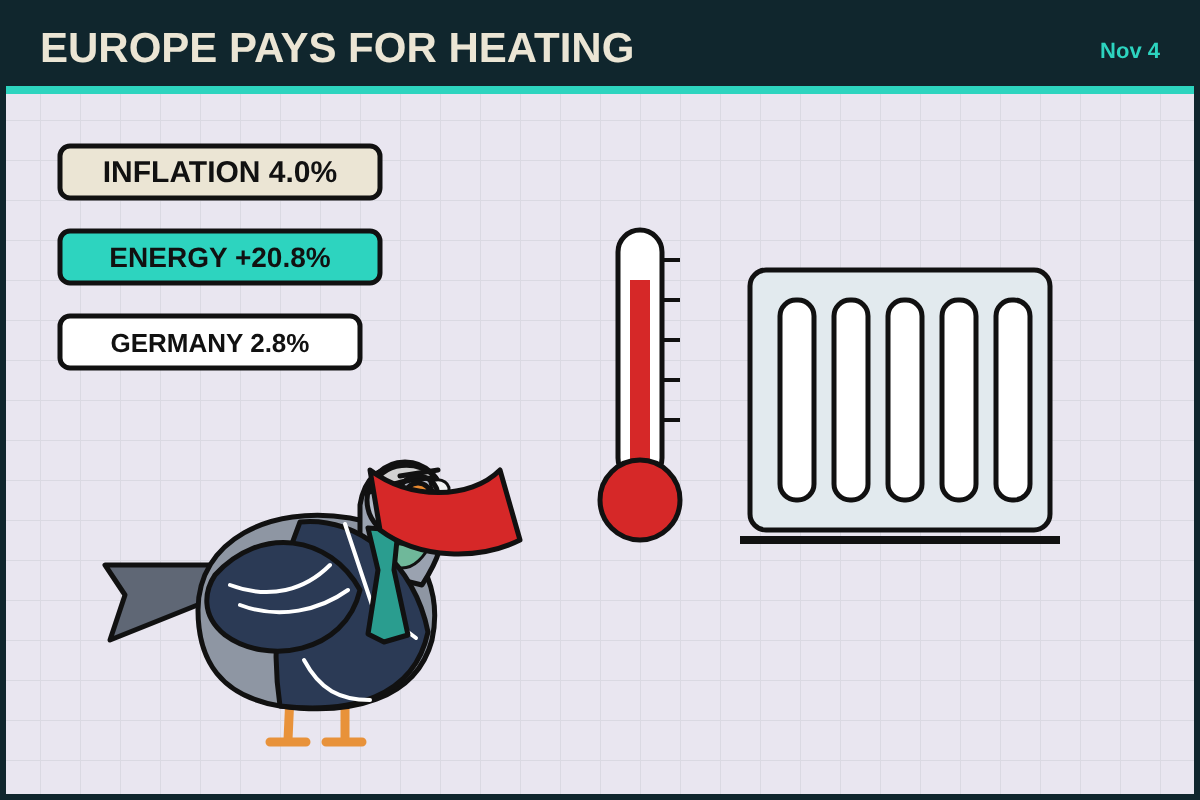
Eurostat reported on November 4 inflation of 4.0% in October, the highest since September 2023, pushed by energy (+20.8%). Germany fell to 2.8% thanks to a fuel tax cut.
What happened
Eurostat reported on Wednesday, November 4 that eurozone inflation rose to 4.0% a year in October, from 3.8% in September. It is the highest since September 2023 and double the European Central Bank's (ECB) 2% target. Month on month, prices rose 0.4%.
Energy rose 20.8% over a year and explained almost half of inflation (about 1.9 points). Excluding energy and food, core inflation held at 2.5%. Services rose 3.3% and food, alcohol and tobacco 1.6%.
Context
By country, Italy jumped to 5.6% (from 4.2%), Belgium to 5.2% and France to 3.8%; Spain eased slightly to 4.9%. Lithuania has the highest (6.1%) and Malta the lowest (2.3%). Six countries are at 5% or more.
Germany was the exception: its inflation fell to 2.8% from 3.3% thanks to a fuel tax cut in force from October 1 until year-end.
The ECB held its rate at 2.5% on October 29, after raising it in June and September; Christine Lagarde said they discussed another hike but decided to wait. Pantheon Macroeconomics expects a 0.25-point increase at the December 16–17 meeting, and Oxford Economics said the data "adds to" that case.
What it means for your wallet
If you live in the eurozone, core inflation staying at 2.5% shows the problem is mostly energy: heating, electricity and transport weigh the most.
An ECB hike in December would make loans and variable-rate mortgages more expensive, and improve what deposits pay.
Track your expenses and income in any currency and see how your month moves.
Create an accountFigures and facts as of the date of the news; they may be delayed or contain errors. Informational content, not financial advice or an investment recommendation.