France now pays more than the US for its debt: its 10-year yield tops 5%
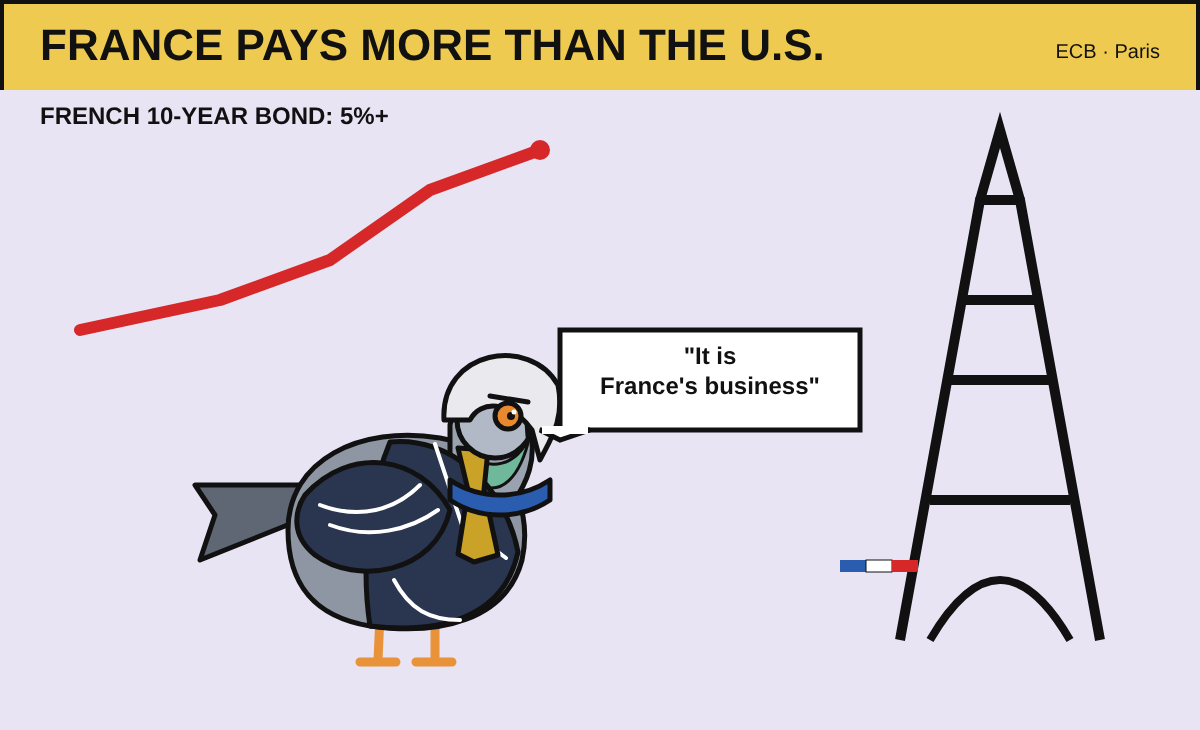
On October 23 the French 10-year yield was above 5%, with the widest gap against Germany in nearly 15 years; debt reaches 119.1% of GDP.
What happened
France now pays more than the US for its debt: on Friday 23 its 10-year yield was above 5% and the gap with Germany was the widest in nearly 15 years. Debt reaches 119.1% of GDP and the 2027 budget, which lowers the deficit from 5.4% to 5%, is still not approved.
The European Central Bank decides on Thursday 29 and is expected to hold its rate. Christine Lagarde has already said the solution lies in French fiscal policy, not in the bank.
Context
A bond's yield is the annual interest received by whoever buys it today, based on its market price. When investors distrust or expect more inflation, they demand more yield and the bond price falls. These yields serve as a reference for mortgages and loans.
The spread against the German bond measures how much more the market asks to lend to France than to Germany; the widest in nearly 15 years signals distrust.
What it means for your wallet
When a government pays more for its debt, that cost ends up in taxes or cuts. That is why the French budget matters beyond France.
Track your expenses and income in any currency and see how your month moves.
Create an accountFigures and facts as of the date of the news; they may be delayed or contain errors. Informational content, not financial advice or an investment recommendation.