Meta posts record sales, but its AI spending worries Wall Street
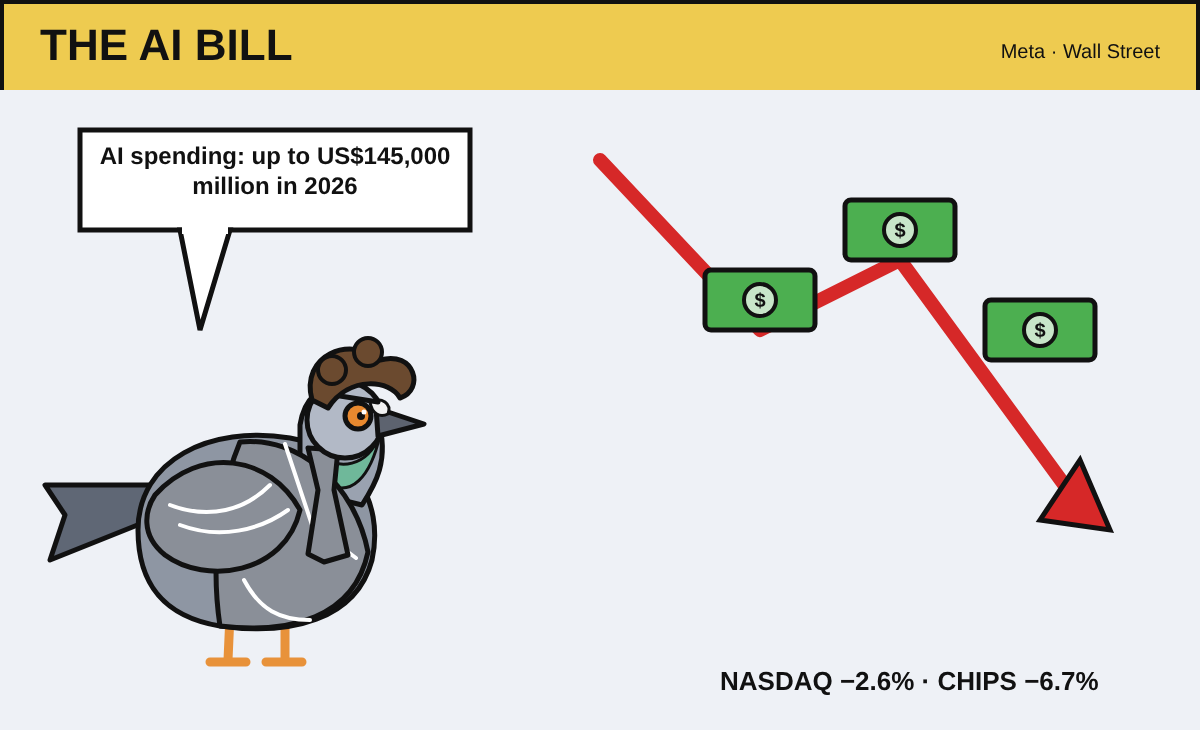
Meta raised its 2026 AI spending to between US$135 billion and US$145 billion and spent more cash than it generated; its stock fell 7% on October 22.
What happened
Meta posted record sales, but raised its 2026 AI spending to between US$135 billion and US$145 billion and spent more cash than it generated for the first time as a public company. Its stock fell 7% on Thursday 22; that day the Nasdaq lost 2.6% and semiconductors 6.7%.
On Friday 23 the Dow closed −1.2% (52,215 points) and the S&P 500 −0.5%, with the 10-year yield at 5.00%. For the week the S&P 500 fell 0.5%, the Nasdaq 0.7% and the Dow rose 0.4%. The Fed decides on Wednesday 28 and is expected to hold its rate at 3.75%–4.00%.
Context
When a company spends more cash than it generates, it depends on debt or accumulated cash to fund its growth. Investors ask how long it will take to recover that investment and whether AI demand justifies it.
With the 10-year yield at 5.00%, companies and governments pay more to borrow, which weighs on growth stocks, whose profits are expected further out in time.
What it means for your wallet
High rates make cards and loans more expensive: knowing how much goes out each month in installments and interest shows how much a debt really weighs.
Track your expenses and income in any currency and see how your month moves.
Create an accountFigures and facts as of the date of the news; they may be delayed or contain errors. Informational content, not financial advice or an investment recommendation.