Oil falls more than 7% in one day on US-Iran talks
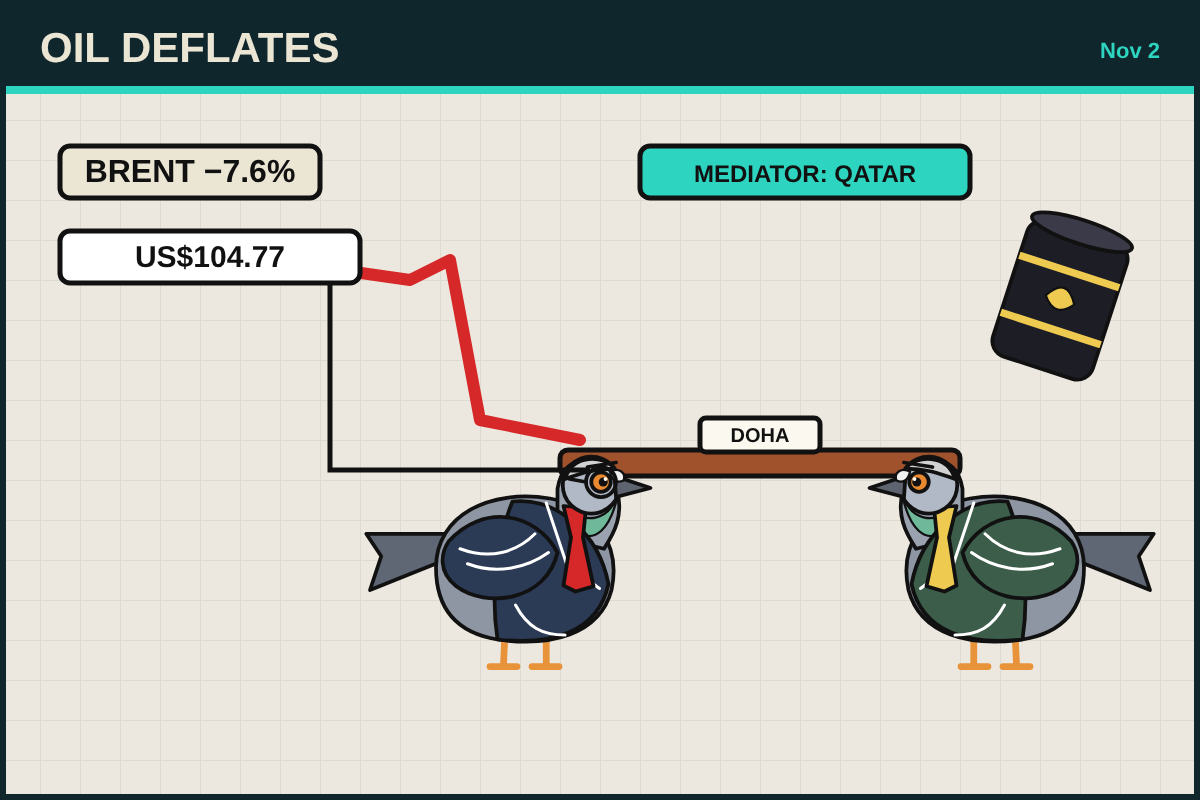
On Monday, November 2, Brent settled at US$104.77 (−7.6%) and WTI at US$96.46 (−7.4%) after signs of dialogue between Washington and Tehran, mediated by Qatar.
What happened
On Monday, November 2, Brent crude settled at US$104.77 a barrel, 7.6% lower than the day before, and US WTI at US$96.46, down 7.4%. It was one of the steepest daily drops of the year.
The move came after Washington and Tehran signaled openness to negotiate, with Qatar as mediator: a Qatari delegation met in Tehran and, according to Reuters, a draft proposal to end the war circulated.
On Tuesday the 3rd, Brent kept falling to US$103.60 and WTI to US$96.09, their lowest levels in about four weeks. On Wednesday morning the 4th, Brent was around US$100.40.
Context
The conflict with Iran has disrupted global energy supply for eight months, and in October crude had risen more than 10% on fears of escalation.
The calm is fragile: Iran's foreign ministry spokesman said Tehran will not accept diplomacy based on coercion, US officials told the Wall Street Journal there was a strike on Iran's Qeshm Island, and since the start of November at least four attacks on ships were reported in the Persian Gulf, the Strait of Hormuz and the Gulf of Oman.
That is why prices move with every headline: a sign of a deal pushes them down and an attack pushes them back up.
What it means for your wallet
If the barrel stays lower, gasoline, transport and airfares should ease, though with a lag of weeks: gas stations and airlines adjust prices more slowly than the market.
Until a deal is signed, it is wise not to assume energy has come down for good.
Track your expenses and income in any currency and see how your month moves.
Create an accountFigures and facts as of the date of the news; they may be delayed or contain errors. Informational content, not financial advice or an investment recommendation.